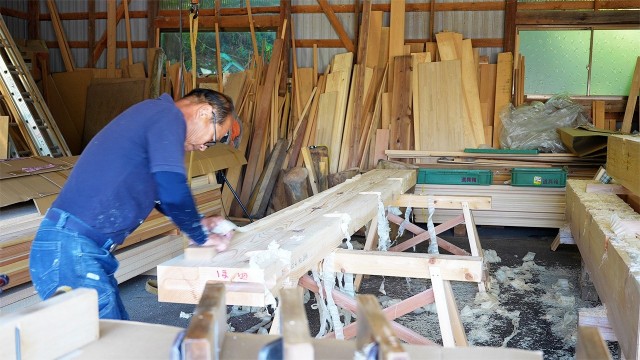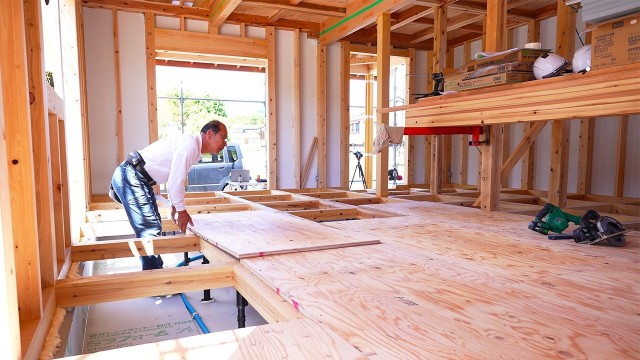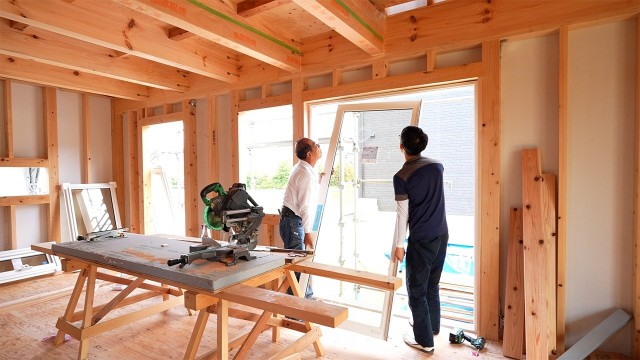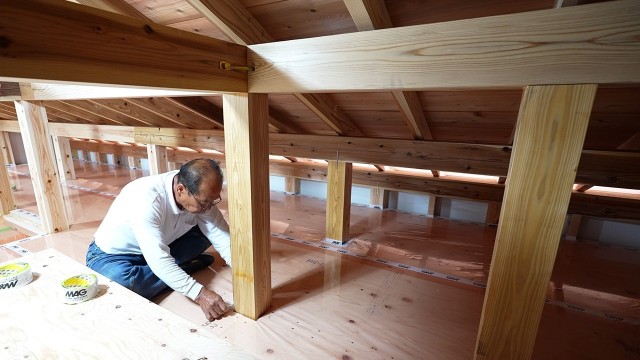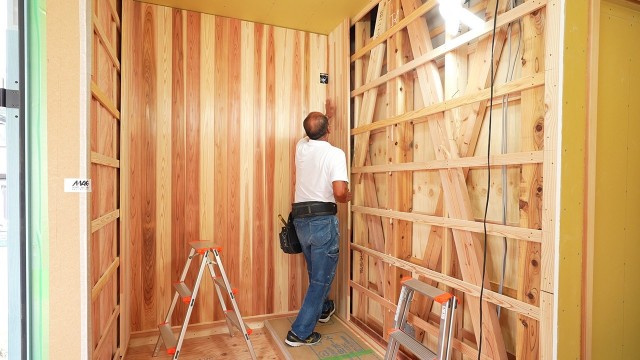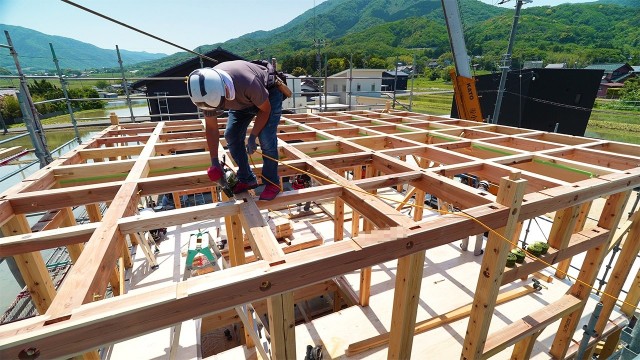
In this video, I'll finish a curved beam. This kind of beam cannot be processed by pre-cut machines. So this time, I'll adjust the shape by chain saw. I have to imagine how to process it in advance, so it's a difficult job. I think this kind of natural shaped materials make a unique atmosphere.
In this video, I'll make the timber joint called "okkakedaisen-tsugi" This time, I'll use the maximum size of timber for this joint. It takes a lot of efforts to make this joint. I feel fun when I drive in dowels into this joint.
In this video, I'll finish the beams that I show in my videos before by plane. It's really hard to finish curved or long beams. But by planing, the timbers will get glossy and be waterproof, so that they will be durable.
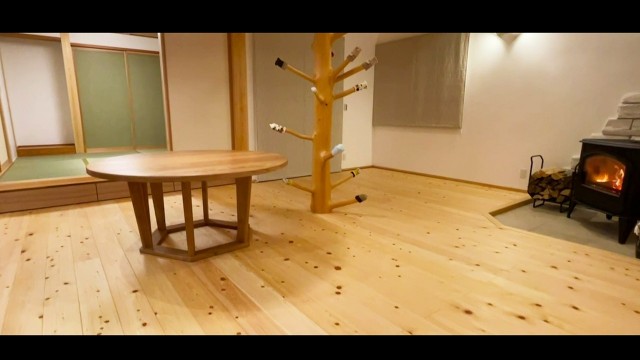
In this video, I'll install an unique shaped column of a log. I've been working as a carpenter for 48 years, but I've never experienced this kind of material with many branches. It was really hard to draw the marking and cut out it. It will be very attractive feature.
In this video, I'll install stiles. Stiles of cypress can be finished very beautifully. There will be a wood stove, so the shrinkage of materials tends to happen easily. So I did my best to prevent problems due to shrinkages.
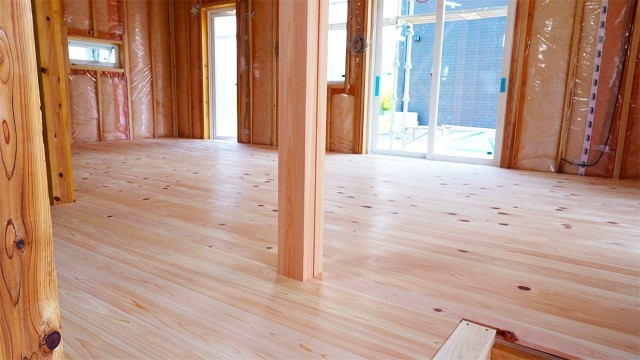
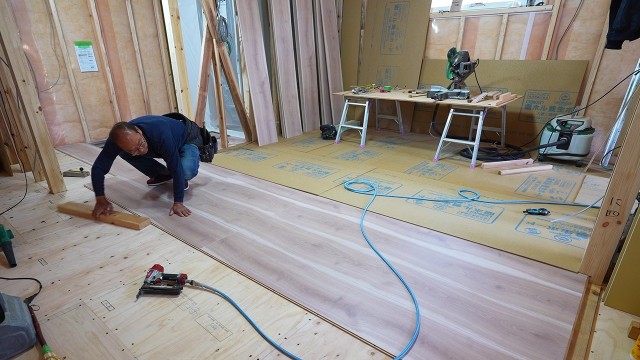
In this video, I'll install 30 mm thick floor boards of Japanese cypress with knags. It was a very hot day after a long rainy season in Japan, so I was really sweaty. Flooring takes time a lot, but I like this work because of sense of accomplishment.
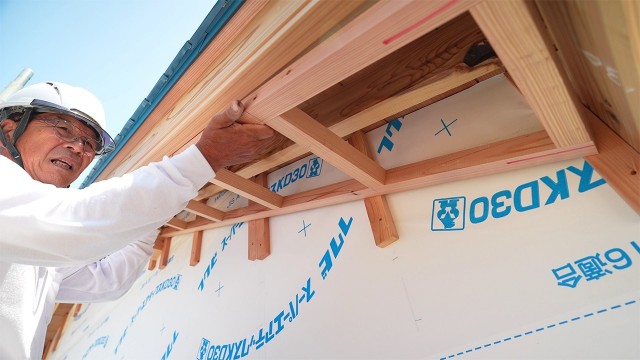
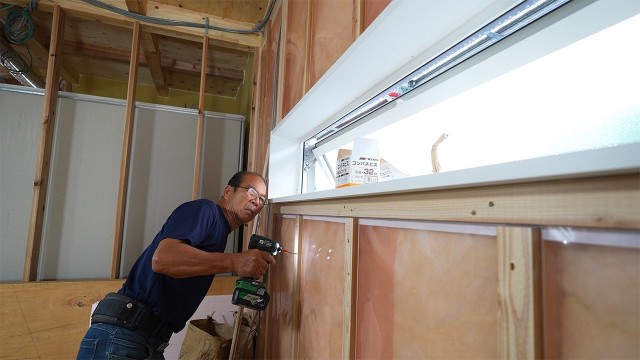
In this video, I'll install a window hood. Window hoods are to reduce the run right and rain that come to sashes directly. The roof will be finished by covered with tinplates later.
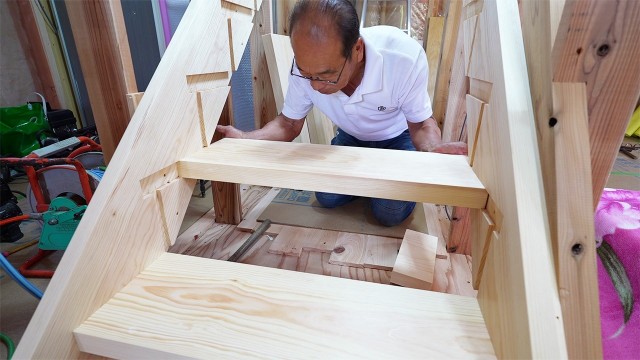
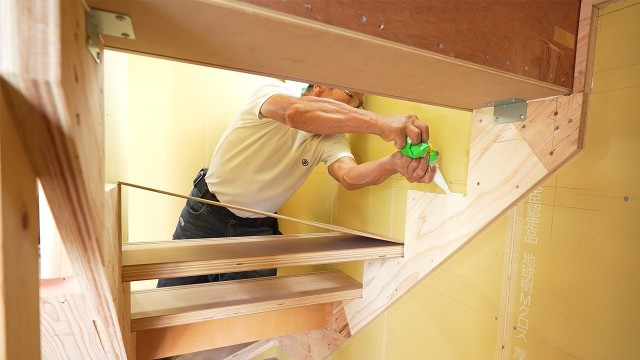
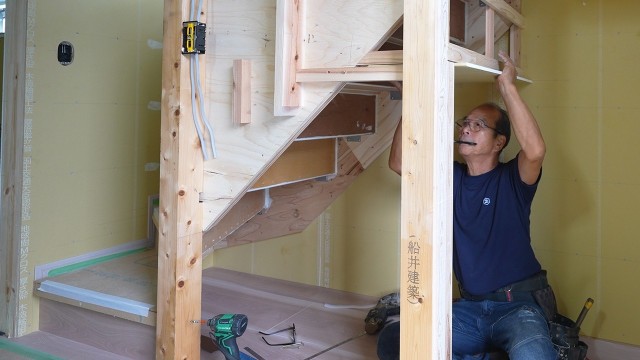
*In the video, it is explained as a spiral staircase, but the correct word is winder stairs. In this video, I'd like to show you one of the biggest works for carpenters. I'll process the winder stairs of 5 steps manually. If it has only 3 steps, it's not a big deal. But to make 5 steps is hard work. I'll use red pine. I think it will be beautiful.
This video is a continuation of the last video. I'll make the straight staircases this time. To use natural wood materials, there are a lot of things to do, so it takes a long time. But I like this work. Wood grain of pine material for this staircase is very beautiful.
In this video, I'll install a ceiling and a curtain board for indirect lightings. Indirect lightings were popular before. These days, drawing rooms seldom are made, but indirect lightings are getting popular again, This time I made simple shape of it.
This time, we will create a floor that is one step higher than the floor on the second floor, a skip floor. Normally, a skip floor is created on the landing between the 1st and 2nd floors, but this time it is different. Since the bottom and top are open spaces, we will process the handrail to prevent it from falling and create a shared space that can be used by the whole family! The finish is to pull the tatami mat down.
In this video, I’ll make counters for hand wash for restrooms of the first floor and the second floor. I made it a simple straight shape for the first floor. And for second floor, I made it a semicircle shape. The material is ash. It will be beautiful after painting!
In this video, I'll finish the space that will be finished by tatami later. This space is raised a little, and a storage will be made under the space.I tried to prevent insects to come in and improve insulation. I used Japanese cypress that is a expensive material.
In this video, I installed door rails called "shikii" and "kamoi" in Japanese. It was difficult to move the columns by jack. I tried to prevent twisting of the materials. Maybe it's rare for you to see this kind of work.
In this video, I finished "tokonoma" that is a Japanese specific space for the ornament. I used the top grade of zelkova. Although it's a small space, it's hard to finish it due to many things to do, and it took a full day.
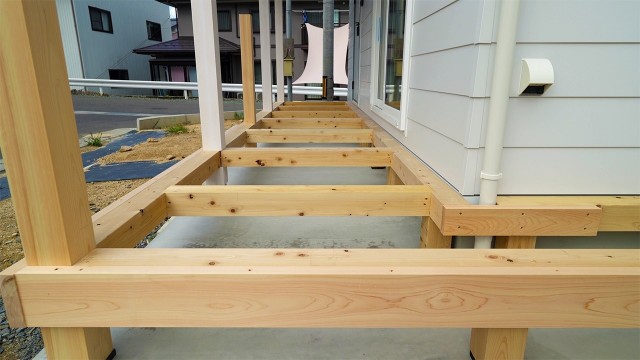
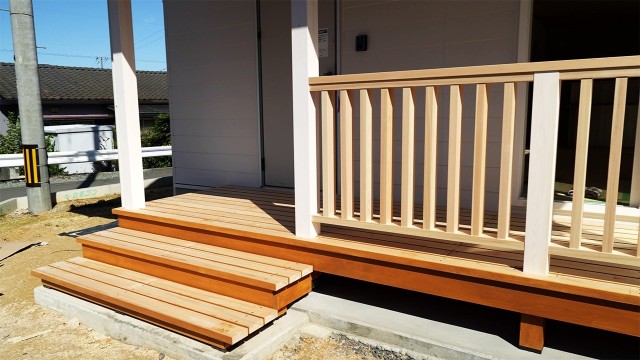
This time I will make a wood deck! We will make all the parts from hinoki cypress. The shape is simple and the easiest to use. I used nails to stop the deck material. The number of occasions when I use nails is decreasing, but I still use the round-headed nails I show!
This time, I will make a Loft ladder from scratch.I have been a carpenter for 48years, but I have never made a ladder.But looking at other carpenters and things for reference, I made it while struggling.But I think the result is better than I expected! It's a little heavy, but it's a luxurious ladder of Japanese cypress!
This time I made a woodshed, but it took a whole four days. It rained and there were some troubles, so I swamped a little, but I managed to finish it! Since it is a conventional construction method that does not use any metal parts, I think it is resistant to rust. I hope it can stock one winter's worth of firewood!
Finally, the house which I have been doing carpentry is now completed! I started to build this house when it was June, and this hot summer was really tough. Meanwhile, I was able to upload a lot of carpentry videos on YouTube I am really grateful to the owner who allowed me to shoot. This time, I made a video of the whole picture until the house was built!
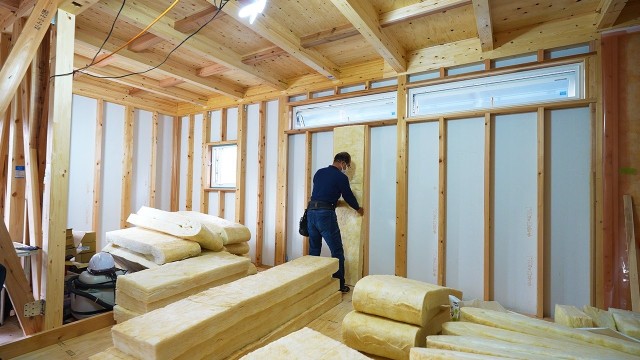
Thank you for your patience! A new building series is about to begin! The framework is already completed. First, I’ll start with the insulation work.
I think I’ll be able to take a break at this location after the sash is fitted and the windows can be closed. After installing the noki-ten, my shoulders hurt.
I have installed the entrance stile and the joists under the floor. It seems the cat likes the smell of concrete when it dries. They always walk on it just before drying out. lol Next time, I’ll install the Japanese cypress floor.
I used Japanese cypress flooring on the first floor, and cedar without knots on the second floor. This floorboard's width is a little short, so it took twice as much time as I thought it would. But it turned out very beautiful.
Installation of Winder Stairs
After about a week, the splendid local pine staircase had been constructed. The woodstove will be installed next to the staircase. It must be a stylish stairwell.
To make a structure that doubles as both a floor and a ceiling, a 30 mm (1.18”) joistless material* must be used. It’s an unusual construction. *Joistless material: A material for construction method using no joist.
*In the subtitle, the dimensions were incorrect. These are the correct dimensions: 00:48 | 30 square mm piece of wood (1 3/16") 02:29 | 4 square cm (1 37/64") 02:33 | 4 square cm (1 37/64") square 10:45 | 40mm square (1 37/64")
It is becoming less and less common to build window frames for an entire house from solid wood. I had planned to make a video with the door frame, but it turned out to be longer than expected, so I divided it into two videos. I always have difficulty fitting the sliding glass door frame alone because it is so large. If only I were 5 cm (1.97”) taller, I could easily install it. The frame was only one and a half ken (2.72 m / 8’ 11”), so there was no problem, but if it was two ken (3.64 m / 11’ 11”), it will sink in the middle and be even more difficult to install.
Exposed pillars are becoming increasingly rare, so I need to use other exposed wood to make door frames. I’ll work hard to install a kamoi*, even as part of a door frame. *Kamoi: a head jamb with tracks for a sliding door.
Finally, the pony wall has been installed, and the staircase is complete. I still need to install another handrail later. The pony wall seemed easy to install, but it didn’t fit well and I had trouble making good progress.
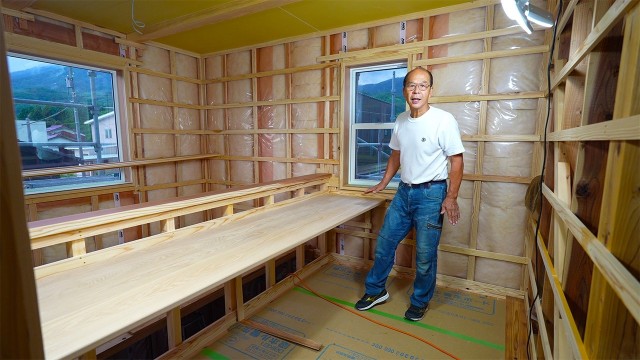
The study has been built, and the carpentry work on the second floor is almost complete. The desk is made of laminated Japanese ash, and the shelves are made of laminated Japanese cypress. Because it was custom-made for the client, I think it was designed to be easy to use.
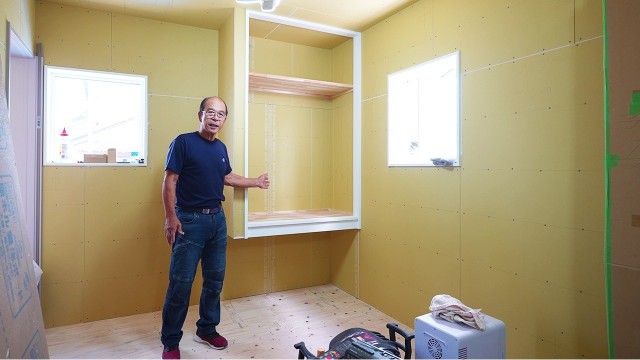
I build a room in addition to the last time when I built a study. I used plenty of high-grade boards to build a walk-in closet. Nowadays, a walk-in closet is indispensable for a new house.
The house is getting closer to completion. Entrances have been changed in many styles over time. Nowadays, small entrance is common.
The last part of the interior work is this Japanese-style room. Installing uchinorimono* is one of my favorite jobs. It took me all day to install them securely. *Uchinorimono: The wooden materials used for the framework of a sliding door, shoji, etc.
The last part of the interior work is this Japanese-style room. It took a long time to build this tokonoma (alcove). As the tokonoma is made of thick Japanese cypress, it shines. You might want to be careful not to scratch this tokonoma. Haha
This house is finally close to completion. The builder has finished concreting the ground, so I begin working around the outside of the building. Considering the size and length of the wood, it might be called a wood deck, but I think it’s between a nure-en (open veranda) and wood deck.
Finally, this house is completed. The carpentry work started in April and continued until the end of September. It took five months. It has been constructed using many traditional timber construction methods; it is so beautiful now the fittings and walls are complete. This is the last episode of Season 2! Thank you!
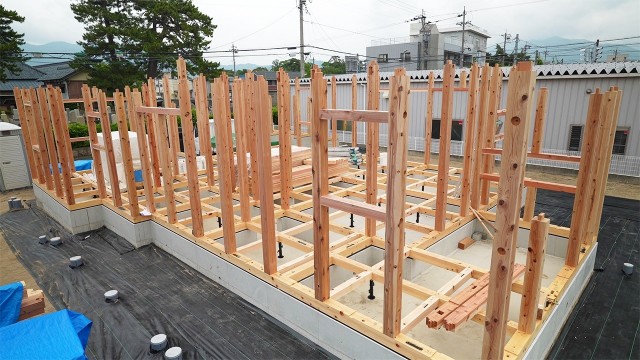
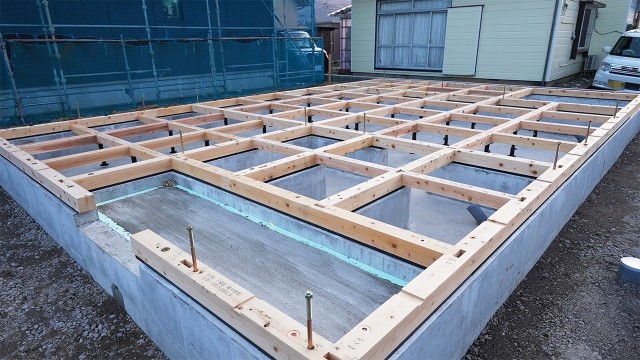
Now that the second season is over, we have moved onto the new site: Season 3! This time, I will share the sill plate installation, which I’ve never shared before! There is a Japanese saying: "A house cannot be built without a foundation." As the saying suggests, if the sill plates are shifted, a house will also be shifted.
Framing will begin tomorrow. When the timber frames are transported to the site, I always participate. This is an important step.
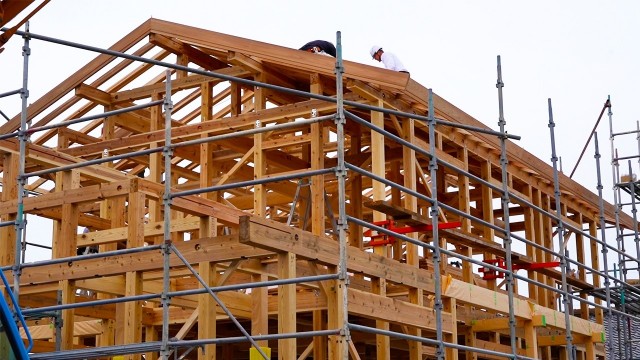
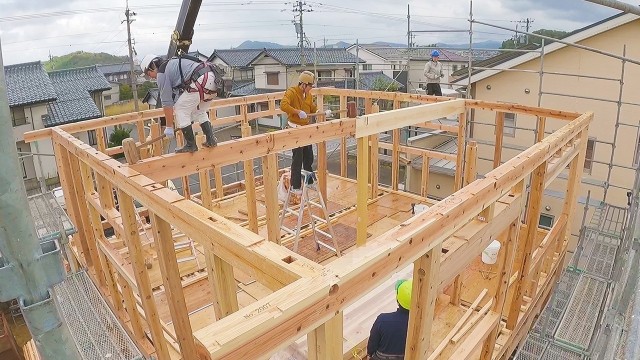
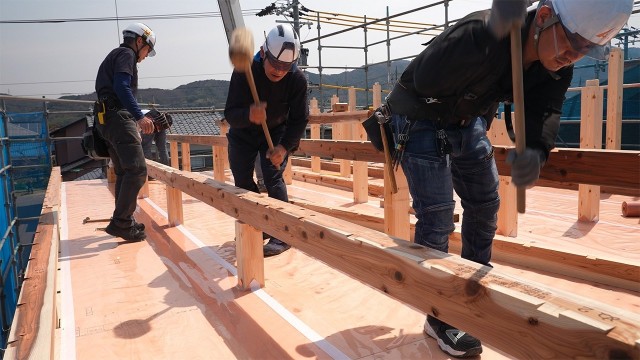
Finally, it’s time for framing. It is a special day called “tatemae” in Japan. People involved in the construction gather and pray for the safe completion of the work. During framing, I have to move around a lot, which exhausts my legs and back. Young carpenters are a huge help.
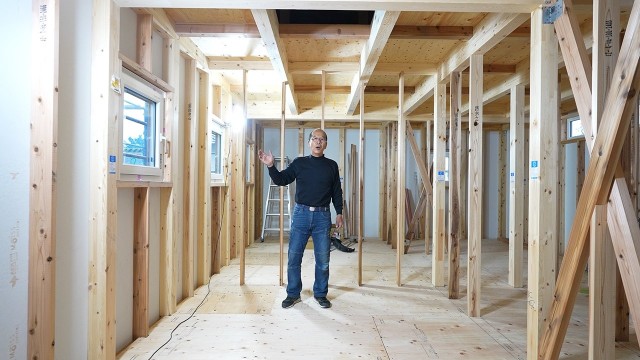
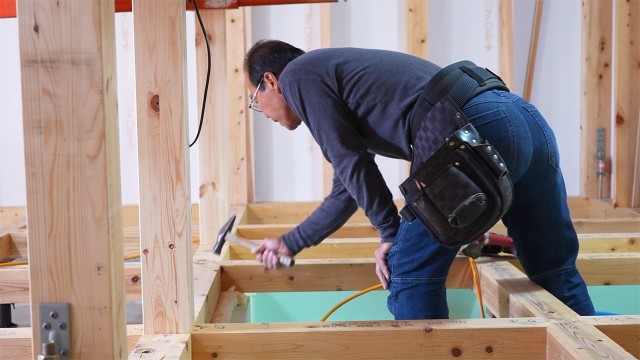
Last time, the framing was finally completed. Today is the next day; I will begin working inside the house. In the aftermath of a major earthquake or disaster, building standards law requires more hardware each year. But this makes the house stronger!
My hands always hurt when I work on insulation. I told a young carpenter that my fingerprints disappeared after insulation work. He advised me to use gloves.
It is nice and spacious to have a porch measuring 1.8 meters squared. It was great to be able to miter corners on the first try!
You may think that installing a ceiling would cause neck pain, but in my case, it hurts my legs. It would be easier to install if I built a scaffold at the right height. When I get back home, my legs cramp up because I go up and down so much.
The Cypress-Scented House! Shikii, Flooring, and Entrance Kamachi Installation
This size of study desk is rarely seen. The weight caused a lot of difficulty in carrying this 3.6m by 60cm (11ft 9.7in by 2ft) ash board. The stairwell is becoming increasingly dynamic. The catwalk will also be built here!
I haven't built 14 straight stairs to the second floor in a while. This is the first time a plaster riser has been used instead of solid wood. It will be challenging work for the plasterer.
It's the first time I’ve ever built a catwalk and made a curved handrail. However, it turned out well! It was hard to make the plan for the whole job.
It was difficult to build the cabinets because the tools for carpenters and cabinetmakers are completely different. However, since they fit perfectly and join well, it's a good idea to install them before painting the wall.
Installing my Favorite Kamoi | The Interior Joinery Work Is Almost Complete!
This is the final interior joinery project. I’m installing the tokonoma (alcove) and oshiire (closet). It is quite challenging to cut and join the shoulder of a stopped dado joint. Precise alignment is required.
Approx. 6m Open Veranda “Nureen” is Built! Orthodox Shape & Japanese Cypress
The Last Carpentry Job of This House
Japanese Carpenter Builds a House in 5 Months Filled with Challenges
Shoyan, a Japanese carpenter, begins Season 4 by installing sill plates for a new house. He meticulously prepares the foundation, adjusts anchor bolts, and drills precise holes in the sills. He also incorporates continuous perimeter foundation vents and installs sleepers, concluding with the tightening of all components.
This video follows a carpenter in Japan as they prepare for the framing of a house. They process and plane timbers, including pillars and exposed beams, and install the columns and lintels. The carpenter explains the importance of precise measurements and the traditional customs surrounding framing days in Japan.
The video provides a detailed look into the traditional Japanese carpentry process of "tatemae" or framing, highlighting the critical steps involved in erecting the main structure of a house.
This video follows a carpenter in Japan as they install sliding glass door frames, level sleepers, and prepare the site for the plumber's arrival. The carpenter emphasizes the importance of a clean job site and demonstrates how to use various tools and techniques to ensure a smooth and efficient workflow.
This video follows a Japanese carpenter as they insulate the floor of a house. They use a unique method of insulation and plywood underlayment, which they explain in detail. The carpenter also discusses the differences between traditional and modern floor construction techniques.
This video follows a carpenter in Japan as they insulate the walls and roof of a house. They use glass wool and an air barrier membrane to create a well-insulated and airtight space. The carpenter shares their experience with a new insulation cutting tool and the challenges of installing the air barrier membrane.
This video follows a carpenter in Japan as they install eaves soffits, known as nokiten. The process involves framing, installing ventilation materials, and securing thin trims before finally installing the nokiten planks. The carpenter highlights the challenges of working with different roof sections, particularly around the valley rafters.
Shoyan, a carpenter based in Japan, installs Japanese cypress floorboards in a house. They face challenges with the floorboards' thickness variation and the plywood underlay, which requires different techniques compared to traditional joists. Shoyan also highlights the difficulties of installing crawlspace access panels, which they find particularly unpleasant.
Shoyan, a carpenter based in Japan, builds a 14-step staircase using pine wood. The video follows the process from measuring and cutting the wood to installing the treads and risers. Shoyan shares tips and techniques for building a sturdy and beautiful staircase, highlighting the challenges of working with pine wood and the importance of careful measurements.
This video follows a Japanese carpenter as they install a funazoko ceiling, which resembles an upside-down boat. The carpenter explains the unique features of this ceiling style and demonstrates how to install the ridge beam, frame, and cedar planks. The video also highlights the importance of categorizing the planks by color for a visually appealing result.
This episode features a carpenter building a multi-functional study desk and bench made of ash wood. They also construct a pony wall with a bookcase for a staircase, ensuring safety and storage. The video showcases the meticulous craftsmanship and attention to detail involved in creating these custom pieces.
This video follows a carpenter in Japan as they install a large porch ceiling and cedar siding. The carpenter details their process, including preparing the wood, building the frame, and securing the siding. They also discuss the importance of using specific materials and techniques to ensure a durable and aesthetically pleasing finish.
This video follows a carpenter in Japan as they build a custom entrance storage unit and an in-wall TV storage box. The carpenter uses laminated wood for the project, explaining the benefits of this material and how they work with it. The video showcases the detailed process of building the cabinets, including cutting, assembling, and installing them.
This video follows a carpenter in Japan as they build a raised Japanese-style room. The focus is on the installation of a large, custom-made threshold (shikii) that will accommodate three sliding shoji screens. The carpenter explains the unique challenges of working with such a wide threshold and the traditional techniques used to create a seamless and functional entrance.
This video follows a Japanese carpenter as they install the kamoi, a decorative element in a traditional Japanese room. The carpenter explains the process of creating a wide kamoi using two timbers and discusses the importance of matching the color of the cedar wood. They also demonstrate how to install the kamoi and a mume, a similar element, to create a head jamb.
Join Shoyan as he constructs a traditional two-tiered tokonoma entirely from Hinoki Cyprus wood. This episode highlights the intricate process of building this ceremonial alcove, from precisely planing wide solid wood boards to meticulously installing floorboards, sills, and decorative elements using traditional Japanese carpentry techniques. See how the unique challenges of working with solid timber are overcome to create a beautiful and historically significant structure.
Shoyan, a carpenter based in Japan, builds a 2m x 4m wood deck using Hinoki cypress. They explain their process in detail, including how they prepare the wood, frame the deck, and install the deck boards. The video ends with the deck nearly complete, ready for a final coat of finish.
This video follows a Japanese carpenter as they build a highly insulated and airtight house. The construction process is detailed, showcasing unique techniques and materials, including polished logs, a funazoko ceiling, and a spacious porch. The carpenter also highlights the use of beautiful wood for the interior, creating a comfortable and stylish living space.
This episode of "New Build Season 5" focuses on the installation of sills, a crucial step in carpentry. The video follows Shoyan as they meticulously position and secure the sills on the foundation, ensuring a strong and level base for the house. The process involves careful measurements, marking, and drilling, highlighting the importance of precision in construction.
This video follows a carpenter as they prepare for framing a new house. They hand-plane exposed pine beams, cut tenons for porch columns, and prepare hardware. The carpenter also discusses the importance of using a UNIC truck for unloading timber and the increased use of hardware for earthquake resistance.
This video details the crucial interior work on a new build. It covers fastening hardware, insulating the foundation for airtightness, and laying the subfloor. The carpenter explains the importance of each step for structural integrity, heat retention, and preventing future issues like creaking floors, highlighting the meticulous details involved in traditional Japanese carpentry.
This episode of New Build Season 5 focuses on installing the door and window frames in a modern house. The builder explains how the order of construction has changed, with diagonal braces now being installed over the subfloor, and discusses the benefits of this new approach. They also highlight the unique features of the front door, including its unusual blue color and electronic lock.
This episode focuses on insulation and air-sealing techniques for a new house. The builder carefully installs fiberglass insulation and an airtight membrane, emphasizing the importance of using high-quality materials and proper installation techniques. They also conduct an airtightness test to ensure the house is well-sealed and energy-efficient.
Shoyan is building a 5-meter-long box eave above a sliding glass door. They encounter a pair of swallows who nest in the house, and one gets trapped inside. Shoyan also explains the ventilation system and how they build the soffit frame. They encounter a challenge when installing the box eave, but they manage to complete it before it starts raining.
This video follows Shoyan as they install flooring on the first floor of a new build. They begin by installing a unique entrance sill called a kamachi, then move on to laying knotty Hinoki cypress floorboards. The video highlights the challenges of working with these unique floorboards and the creative solutions Shoyan uses to overcome them.
This video follows Shoyan as they build a straight staircase with a landing. They discuss the benefits of using pine for staircases and demonstrate their process for cutting, fitting, and securing the stringers, treads, and risers. The video also highlights some unique design elements, such as the landing's access from both sides.
Shoyan, a Japanese carpenter, builds traditional fall prevention pony walls and a long, versatile ash wood counter using classic carpentry techniques like chisel sharpening and mortise and tenon joints. He details the construction of the pony walls with a camoy-style timber and a seamless trim, and meticulously crafts the counter, ensuring its durability with hidden support brackets. The completed project creates bright, functional spaces in the home.
This episode focuses on installing jamb extensions for windows, sliding doors, and the kitchen ceiling. The builder uses solid wood planks, carefully measuring and cutting them to fit the uneven floor and existing structures. They also install a drop bulkhead for the kitchen ceiling, which will be covered with cedar planks.
The video showcases the construction of a Japanese-inspired breakfast bar and pony wall in a modern open kitchen. The carpenter, Shoyan, builds an L-shaped pony wall, installs drywall, and then constructs the breakfast bar using ash wood. He emphasizes safety by rounding edges and meticulously hides screws with wooden plugs for a clean finish. The video concludes with the completion of the breakfast bar and a small niche in the front wall, highlighting how the addition enhances the kitchen's versatility and luxury.
This video follows a carpenter as they complete the interior joinery work for a new house. They focus on the entrance, building a shoe storage cabinet, a partition wall with arched openings, and a display shelf with a handrail. The carpenter explains their techniques and materials, highlighting the unique features of this modern design.
Shoyan is building a large, American-style deck with a railing for a new home. They are using Hinoki cypress and focusing on simple joinery to prevent water damage. The video follows Shoyan as they frame the deck, encountering challenges like rain and a broken laser level.
In this video, Shoyan focuses on the final stages of building an American-style deck. He begins by prepping and cutting the deck boards, then constructs the stair framing, ensuring it matches the deck's appearance. He also fabricates the railing sections in his workshop before transporting them to the site. The video details the installation of the deck boards, emphasizing precise spacing and proper drainage. Finally, Shoyan installs the railing and cap rail, highlighting how the addition of the railing gives the deck its distinct American look. The project concludes with Shoyan expressing satisfaction with the final result and ensuring all surfaces are smooth and safe.
Experienced carpenter Shoyan completes a five-month build of a Western-style home, showcasing traditional and modern techniques. The build highlights meticulous craftsmanship, from foundation to finish, including detailed joinery and unique design elements. Watch a detailed timelapse of the construction process.
Experienced carpenter Shoyan builds the sill for a compact, durable house. This sixth new build features traditional Japanese carpentry techniques alongside modern methods. Despite weather challenges, the foundation and sill are expertly installed, setting the stage for the frame.
Veteran carpenter Shoyan installs windows and reinforces the frame with studs and diagonal braces, prioritizing weatherproofing and seismic safety. This earthquake-resistant build incorporates specialized hardware and advanced techniques. The process emphasizes meticulous detail and precision in construction.
Experienced carpenter Shoyan details modern subfloor framing techniques. This episode focuses on insulation installation and the subsequent subfloor application, showcasing careful measurements and precise material placement. The process prioritizes strength and stability, emphasizing a robust foundation.
Shoyan meticulously insulates and air seals a new house, demonstrating crucial modern building techniques. This detailed process includes applying airtight membrane and copious amounts of sealing tape. The video showcases both wall and attic insulation methods.
Shoyan tackles interior construction, starting with the floor using synthetic materials instead of solid wood. The entryway presents unique challenges due to its unusual angles and requires creative cutting and joining techniques. This episode showcases the precision needed when working with these new materials and their limitations.
A 52-year carpenter tackles pre-cut stairs in a new build, facing unexpected challenges. This involves precise measurements and careful assembly, including winder steps and support blocks. Despite the pre-cut components, meticulous on-site adjustments are required for a perfect fit.
Shoyan installs pre-made window and door jambs, demonstrating their assembly and unique installation challenges. The process includes using furring strips for support and specialized screws. Discover how these modern materials compare to traditional carpentry techniques.
Shoyan Japanese Carpenter finds clever solutions for a tiny entryway. This episode features unique ceiling and arch installation techniques, plus a custom shoe cabinet. Watch as every inch of space is maximized in this small build.
Shoyan crafts a floating closet and pantry, showcasing joinery techniques. This episode also features a unique bathroom counter installation in a tight space. Discover the challenges of working with ash and various wood types.
Shoyan Japanese Carpenter builds a fully Western-style home, showcasing the construction from sill to stylish interior finishes. Framing, insulation, and unique interior design elements are detailed throughout the build. This season features prefabricated materials and modern design choices.